
On the Sensex chart, ICICI Bank, HDFC Bank, Axis Bank, IndusInd Bank and Bajaj Finance emerged as the major laggards, dropping over 6 per cent.

Stock markets in structural bull run but there can be bouts of volatility says Ravi Gopalakrishnan, head, equities, Canara Robeco Mutual Fund

Despite multiple headwinds at the start of 2023, the Indian markets delivered a strong performance, posting 19-20 per cent growth for the year. Even as new records were set, investor sentiment remains strong going into 2024, given the lower inflation, expectations of steady to lower interest rates, higher economic growth, and strong inflows. However, the overriding concern for most brokerages is valuations.

It is to be seen if SBI under Setty, who will have a three-year term, can ride the economic cycle to take SBI to new heights, navigating some of these challenges.

Equity benchmarks continued their winning momentum for the third day on Thursday and jumped over 1.50 per cent, tracking an overall bullish trend in Asian equities. On the political front, the BJP headed for a second straight win in politically crucial Uttar Pradesh and dominated the trends chart in three other states. The 30-share BSE benchmark Sensex opened in the green and further zoomed 1,595.14 points or 2.91 per cent to 56,242.47 during early trade.

Post the correction over the past one year, we are seeing opportunities across sectors.
ONGC was the top loser in the Sensex pack, shedding 4 per cent, followed by Bharti Airtel, SBI, IndusInd Bank, NTPC, Sun Pharma and ITC. On the other hand, Bajaj Finance, Bajaj Auto, Reliance, Bajaj Finserv and Asian Paints were among the gainers.

Auto parts maker Sona BLW Precision Forgings (Sona) reported strong revenue in the fourth quarter of financial year 2023-24 (Q4FY24) as demand for electric vehicles expands. The company reported a 19 per cent year-on-year (Y-o-Y) increase in sales to beat street estimates. Sales were powered by a 34 per cent growth in the battery electric vehicle (BEV) segment and a good show in the differential gear segment.
Currently, trades on the Indian stock exchanges are settled within two days, just like most major markets such as Singapore, Hong Kong, Australia, Japan, and South Korea. Indian exchanges, however, will be moving to T+1 settlement from February 25 in a phased manner.

Even if the Paytm fiasco does not mark the end of the bull run, at least some sanity will return to the wild IPO market, observes Debashis Basu.

IndiGo share price today: IndiGo share price fell as much as 4.8 per cent to a low of Rs 4,275 per share on the BSE in Monday's intraday trade as investors booked profit in the stock post a its April-June quarter (Q1) results for financial year 2024-25 (FY25). The stock ended 1.36 per cent lower at Rs 4,430 as against a 23-points gain in the benchmark BSE Sensex. The selling also got exacerbated as the management commentary, post Q1FY25 results, highlighted that inflationary pressure could likely dent July-September (Q2FY25) performance.

Out of 11 companies that got listed in 2019, nine have outrun the market by gaining more than 10 per cent against their respective issue price.

Among the Sensex firms, Adani Enterprises and Adani Ports sustained their gaining momentum and traded higher by 4.40 per cent and 4.37 per cent, respectively. BPCL, Axis Bank, Mahindra & Mahindra and SBI were the other major gainers. On the other hand, HCL Tech, Infosys and Bajaj Auto traded in the negative zone with a loss of up to 1.54 per cent.

Companies from the capital goods space will under-perform.

Number of stocks trading above 50 times and 100 times earnings are at record highs. When this happened in 2015 and 2016, the Sensex fell 22.6 per cent in a little over a year's time after peaking in January 2015, while it fell by 11.3 per cent in two months from its peak in September 2016.
PowerGrid was the top laggard in the Sensex pack, shedding over 2 per cent, followed by HCL Tech, ONGC, M&M, Axis Bank, TCS, Reliance Industries and Infosys. On the other hand, Asian Paints, Titan, Tata Steel, Bajaj Finance and Bajaj Auto were among the gainers.
From the 30-share pack, Titan, Tech Mahindra, Maruti Suzuki India, Wipro, Nestle India, TCS, Larsen & Toubro, HCL Technologies, Tata Steel and HDFC Bank were among the major laggards. NSE Nifty declined 69.75 points to settle at 17,153.

Indian indices fell more than those of most other emerging markets.
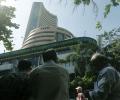
BSE benchmark Sensex plummeted over 388 points to close at 58,576.37 on Tuesday, tracking weakness in index majors Wipro, RIL and Bharti Airtel amid a weak trend in global markets. Investors also remained cautious ahead of crucial macroeconomic data announcements -- industrial production for February and inflation rate for March -- post trading hours. The Sensex declined 388.20 points or 0.66 per cent to settle at 58,576.37. During the day, the benchmark tanked 666 points or 1.12 per cent to 58,298.57.

Equity benchmark Sensex on Monday crashed about 1,546 points to sink below the 58,000-level due to across-the-board selloff tracking sluggish global markets. Besides, persistent foreign capital outflows continued to affect the market sentiment, traders said. Benchmark indices started the session on a weaker note and the selling intensified during afternoon trade, with almost all sectoral indices ending in the red. The 30-share BSE Sensex ended 1,545.67 points or 2.62 per cent lower at 57,491.51.

Investors shunned shares of oil marketing companies (OMCs) on Friday as they feared that the government's decision to cut retail prices of petrol and diesel could hurt the companies' profit margins in the near term. On Thursday, the government announced that OMCs will reduce pump prices of petrol and diesel after a record 22 months, making them cheaper by Rs 2 per litre in the national capital. The changes were effective from Friday.

As stock markets continue to witness a dream rally, the total market valuation of domestic listed companies has soared to a record $1.6 trillion on a day the benchmark BSE Sensex ended at a new closing high of 28,177.88.
Sensex, Nifty have lost about 6%, against 0.5-5% decline in other key Asian indices.

Vodafone Idea's (Vi's) subscriber loss reduced to a seven-month low in March, and alongside the company added 1.1 million broadband users after two months of net loss -- two things analysts have noted as key trends that need to be monitored. While Vi has been losing customers for more than two and a half years now, the churn reduced to below a million after five straight months in March, the Telecom Regulatory Authority of India (Trai) data has shown. "Jio's softer than usual subscriber growth in March, and VIL's slowing subscriber market share loss are key trends to keep an eye on going forward," global investment banking and financial services major UBS said in an analyst note.

Equities are the go-to asset class as far as ultra-long-term returns are concerned. Over the past 123 years, global equities have provided an annualised real return of 5 per cent in US dollar terms, while bonds have delivered 1.7 per cent and short-term bills just 0.4 per cent, according to Credit Suisse's Global Investment Returns Yearbook 2023. In collaboration with the London Business School, Credit Suisse has analysed over 100 years of returns for key asset classes in 35 countries.

Equity benchmark Sensex tumbled over 273 points on Tuesday, tracking losses in index majors Reliance Industries, Dr Reddy's and Axis Bank amid a massive selloff in Chinese markets. Despite opening on a positive note, the 30-share BSE index turned red to end 273.51 points or 0.52 per cent lower at 52,578.76, while the broader NSE Nifty fell 78 points or 0.49 per cent to 15,746.45. Dr Reddy's was the top loser in the Sensex pack, plunging over 10 per cent, after the company reported s 36 per cent decline in consolidated net profit at Rs 380.4 crore for the quarter ended June 30, 2021, on account of higher expenses.

For 20 years, the stock market headed nowhere, and this has created permanent aversion.
Given the volatility of the global marketplace, India is already on a strong wicket and well poised to provide a lucrative option to foreign investors.

Notwithstanding the inflation pinch, analysts believe the Indian retail sector is on the 'cusp of accelerated earnings growth' as consumer sentiment and discretionary purchases bounce back from the Covid-19 pandemic. "The shift in consumer preference from the unorganised sector to the organised, coupled with uptick in domestic demand as people resume work from office, will cheer the Indian retail sector," says Nishit Master, portfolio manager, Axis Securities. Shopping malls are witnessing increased footfall in lower tier towns and standalone stores as consumption picks up and mobility improves.

'The decision to supply free food grains is not an economically sound decision because the government will find it very difficult in future to charge anything for food grains.'

Indian companies' market capitalization has grown at the fastest pace last year among major economies despite contraction in GDP, economists from SBI said, flagging the risks to financial stability it poses. Further, retail investors have shown higher interest in markets and their numbers have increased by 1.42 crore in FY21 and another 44 lakh in April and May, they said in a note, wondering if this will be a lasting behavioural change or is transitory. The economists at the country's largest lender attributed the growth in equity markets to lower returns on other financial instruments amid a low rates regime, increase in global liquidity, and even a tendency to spend more time at home because of mobility restrictions which led many to trade more.

Very often, 'sentiment' drives prices well beyond what is warranted and it is hard to forecast market sentiment, explains Debashis Basu.

A day after Adani Group's shares took a beating as Hindenburg Research made damaging allegations against it, the group on Thursday said it is examining legal options to take "punitive action" against the US activist investor for its "reckless" attempt to sabotage a share-sale at the conglomerate's flagship firm. "The maliciously mischievous, unresearched report published by Hindenburg Research on January 24, 2023 has adversely affected the Adani Group, our shareholders and investors. "The volatility in Indian stock markets created by the report is of great concern and has led to unwanted anguish for Indian citizens," the group's lead head Jatin Jalundhwala said in a statement.
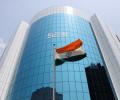
The rumour verification process would now be triggered by changes in price or 'material price movements', as the paper defines it. What this means is that companies would need to verify rumours only if the share price moves significantly.

With the frontline Indian benchmark indices trading near all-time highs ahead of the general elections that begin later this week, Marc Faber, Editor and Publisher of "The Gloom, Boom & Doom Report" tells Puneet Wadhwa that the Indian stock market is relatively expensive, especially the index (large-cap) stocks.

From the Sensex pack, JSW Steel, Tata Steel, NTPC and UltraTech Cement emerged as major winners, closing the day with a gain of up to 3.33 per cent. On the other hand, Asian Paints, ITC, L&T and SBI were the laggards, ending the session up to 3.95 per cent lower. Of the 30 Sensex stocks, 14 closed the day in green, while on the 50-stock index Nifty 25 scrips ended with gains.

The imposition of 15 per cent export duty on steel has suddenly altered the prospects of the sector to negative and led to a big sell-off in steel stocks. Iron ore and pellet exports have to face duties of 45-50 per cent, which means they become uncompetitive. The Ukraine war has led to a supply crunch in global markets and pushed up prices, with Europe, in particular, looking for replacements for Ukrainian and Russian exports.

Concerned over the fallout of the Red Sea crisis and severe shortage of containers against the backdrop of a steep decline in merchandise exports in August, the Union government is pulling out all the stops to find a solution. To begin with, the government has devised a strategy aimed at boosting container supply and supporting exporters.

Top laggards in the Sensex pack included IndusInd Bank, Bajaj Finance, ITC, UltraTech Cement and HDFC Bank, while Sun Pharma, Tech Mahindra, M&M and Asian Paints ended with gains.

Geopolitical headwinds leading to lower demand from export markets, coupled with lower domestic buying, have dragged the auction average of Darjeeling tea to its lowest level since 2015. Data from Calcutta Tea Traders Association (CTTA) shows that the average price of Darjeeling tea at Kolkata auctions for January-December 2023 was Rs 319.74 per kg. The last time it dipped below this level was in 2015 at Rs 285.71 per kg.
